Dashboard (Guest)
Main content blocks
Skip Course categories Skip Recently accessed coursesRecently accessed courses
No recent courses
Latest badges
Random glossary entry
Agar oil
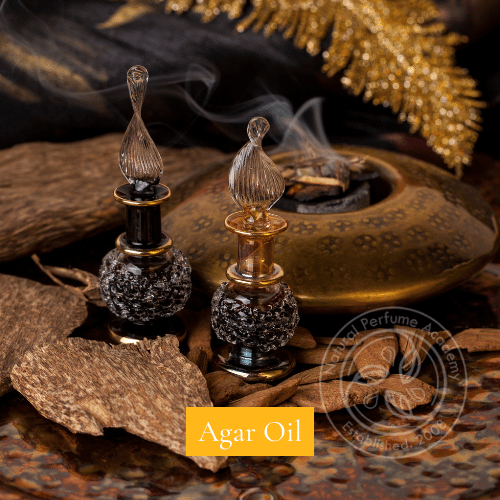
Title:Agar Oil
Botanical Name: Aquilaria agallocha
Description: Agar oil, also known as oud oil, is extracted through water distillation from the fungus-infected wood of the Aquilaria agallocha tree. This tree is primarily found in northeastern India, but it is also native to China and Vietnam. The oil is highly valued in perfumery for its deep, complex, and long-lasting fragrance.
Uses: Agar oil is used in high-end perfumes and traditional incense. It is prized for its rich, woody, and sweet aroma, which adds depth and character to fragrance compositions.
Goes Well With: Agar oil blends well with sandalwood, rose, and other precious woods and floral oils, enhancing the overall complexity and richness of the scent.
Regions: Northeastern India, China, Vietnam
Extraction Method: Water distillation from fungus-infected wood
Unique Characteristics: The infection of the wood by fungi creates a resin that gives agar oil its distinctive and highly sought-after fragrance.